


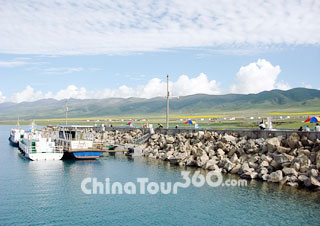
 Qinghai Lake
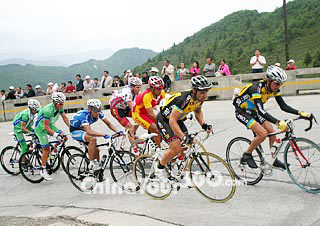 Qinghai Lake Cycling Race
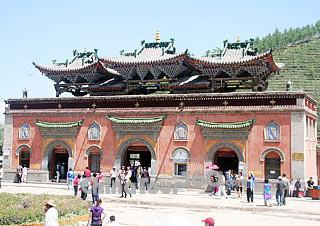 Ta'er Monastery
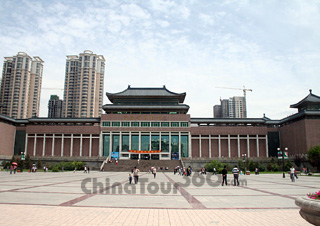 Xinning Square
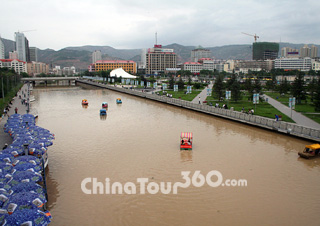 Xining City
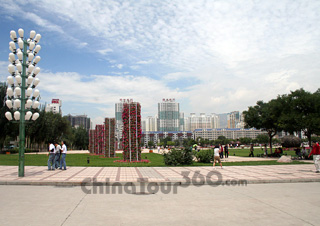 Xining Street Scene
 Facts
Facts
Phone Code: 0971
Postal Code: 810000
Area: 7,665 square kilometers (2,959.5 square miles)
Population: 2,228,000 (2011 statistics)
Nationalities: Han, Tibetan, Hui, Salar
Location: Xining is the provincial capital of Qinghai province, and lies in the Huang River Valley in the eastern region of Qinghai. Its longitude is at 101°49 ′17″E and the latitude is 36°34′13″N.
Physical Features: Xining is located at the east edge of the Qinghai-Tibet Plateau near the upper reaches of the Huang River, a tributary of the Yellow River. There are four major mountains in Xining. They are the Cold Dragon, Daban and Laji Mountains, plus the ridge on the southern side of the Yellow River. Three rivers, the Datong River, the Huang River, and the Yellow River flow among the four mountains. Fertile valleys lie the between the mountain peaks.
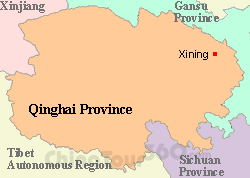
Xining Map
History: Xining has a history of over 2,100 years. Once named Xi Ping Ting, it was located on the southern branch of the ancient Silk Road, a vital trade route. In the year of 1104 AD, during the Northern Song Dynasty (960 - 1127 AD), the emperor Song Huizong renamed the area Xining (Peacefulness in the West) in the hope that the western region of his country would be peaceful.
Attractions:
Known as one of the most popular tourist cities as well as a world-famous summer resort, Xining is endowed with charming natural beauty and a unique Tibetan flavor. Qinghai Lake is the largest salt water lake and the largest inland lake in China. The annual Tour of Qinghai Lake International Cycling Race attracts over 140 riders and thousands of visitors. Bird Island, located in the lake, is an ideal destination for bird lovers. Ta’er Monastery is one of the six greatest monasteries of the Gelug Sect of Tibetan Buddhism. First constructed in 1560 AD, during the Ming Dynasty (1368 - 1644 AD), the monastery has a history of more than 400 years. There are eight pagodas in the temple, which are said to refer to the eight merits of Sakyamuni, the founder of Buddhism. Embossed embroidery, frescoes, and yak butter sculptures are three wonders of the Ta’er Monastery.
Transportation
 Air: Air routes linking Xining with Beijing, Shanghai, Xian, Chengdu, Chongqing, Guangzhou, Kunming, and Urumqi are available at the Caojiabao Airport, which is 29 km (18 miles) east of the city center. There are shuttle buses between the city center and airport, and the bus fare is CNY 21 per person. The travel time is 30 minutes. Taxi fare from the airport to the city is around CNY 80 per cab.
Train: The city lies at a junction of Lanzhou-Qinghai Railway, so direct trains departing from Xining Railway Station reach Lhasa, Golmud, Beijing, Shanghai, Xian, and Qingdao. It is the an important transfer station on the Qinghai-Tibet Railway, and almost all the trains heading to Tibet stop in Xining. The travel time by train to Lhasa is about 24 hours.
Bus: Visitors can also take a long-distance bus from cities or towns both in and outside Qinghai Province to get to the city. There are two bus terminals in Xining, the Xining Long-Distance Bus Station and the Xinning Road Bus Terminal. The first bus station mainly operates buses to cities and towns in other provinces, while the other bus terminal operates buses to Lanzhou and destinations within Qinghai Province.
Intercity Bus: There are more than 40 bus routes in the city, connecting most of the rural and urban areas of the city. There are also minibuses numbered from 101 to 109 running between the city center (especially from Xining Railway Station) and the suburban and the new district in the south of the city.
Taxi: Taxis charge CNY 6 for the first 3 km, and an additional CNY 1.3 per kilometer beyond that.
Rent a Car: Many visitors also choose to rent a car to travel within and around the city, which is more convenient and flexible than public transportation. Please choose only authentic companies for car rental and discuss the fee with the driver before you start your tour.
Weather: Xining has a continental plateau semi-arid climate with mild winters and cool summers, so it is a natural summer resort.
Dining and Shopping
The local food features strong ethnic flavors, as many Hui, Tibetan and Salar people live in the city. Famous snacks are boiled mutton, yoghurt, cold noodles, noodles with sheep intestines, and tsampa with butter.
The local specialties are dried beef, ginseng fruit, carpets, woolen blankets, butter sculpture and the medicinal herbs cordyceps sinensis and cartialgenous. Most of the shopping centers are located in the eastern part of the city.