


Admission Fee: CNY 15
Opening Hours: 09:00 - 17:00
Best Visiting Time: April to October
Location: Known as 'the Ninth Pass of the China Great Wall', Niangziguan is located 45 km northeast of Pingding County, Yangquan City, Shanxi Province, just at the border between Hebei and Shanxi provinces.
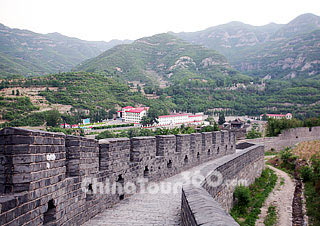
 Introduction: The castle of Niangziguan backs on the high mountains, and faces bottomless valley, with the Taohe River flowing through in the northwest. On its two sides, the great walls spread along the undulate mountains. The sharp mountains, deep valley, gushing river and the pass together formed a natural barrier between Shanxi and Hebei provinces, having the momentum that 'If one man guards the pass, ten thousand are unable to get through.'
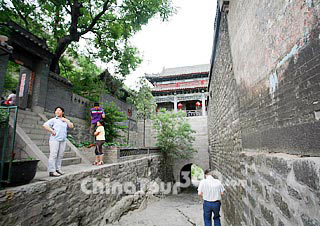
The present Niangziguan was built in 1897 of the Ming Dynasty (1368 - 1644), made up of east and south gates as well as 650-meter (710.8 yards) long city walls. The east gate was built with ordinary bricks, with a placard above the gate bore the inscription meaning Niangziguan is under the direct control of the capital. On the gate, there is a gate tower for inspecting the troops and watching the enemies. Inside the gate, there is a brick-built high platform which is said to be the Dianjiangtai (general assignment platform) of Princess Pingyang, daughter of Emperor Gaozu of the Tang Dynasty (618-907). The firm and impressive bluestone-built south gate was inscribed with four distinctive Chinese characters on above meaning shield of the capital. In front of the gate is a stone paved ancient road. The gate tower on the south gate is said to be the place where Princess Pingyang had opposed the enemy. The Guandi Temple, Zhenwu Pavilion, residences and streets still keep their original features. Besides, there are many other scenic spots, including Chengtianzhai, Laojun Cave, Beacon Tower and Summer Tower.
It is also famous for its natural beauty of green hills and clear waters. The Niangziguan Waterfall located about 300 meters (328 yards) away from the east gate of the pass pour down the cliffs, forming a gorgeous water curtain. Aside the waterfall, three are Water Curtain Cave, Spurting Spring and other natural sights. In the village at the foot of the pass, water flows in front of every family household, and springs well up everywhere, like the fertile plains lying south of the Yangtze River.
Origin of the Name: Niangziguan enjoys a history of over 1,800 years, and its name was also changed for several times such as Dong Zhuo Lei, Wei Ze Guan, Cheng Tian Jun and Niang Zi Guan. The present name translated into Women's Pass in English originated from Princess Pingyang who had ever garrisoned this pass with a group of women soldiers. It's said that Princess Pingyang always rode a horse and carried a sword with her, acting rather brave during the garrisoning period. As a result, her stories have come down to modern times in the surrounding areas.
Transportation:
A. By Train: There are direct trains to Niangziguan from Beijing, Zhengzhou, Shijiazhuang, Tangshan, Taiyuan, Yangquan, Yuncheng, Baoji, Shanghai, Chengdu and Nanchong.
B. By Bus: Visitors can take buses from, Pingding County or Yangquan, Taiyuan cities, and then rent a car to the scenic spot. The cost for renting a car is about CNY 40 for a sound-trip and CNY 25 for a one-way trip.
Dining: Shuimo Noodles (noodles made of flour ground in a mill by adding some water) made of corn, all kinds of beans and wheat is the representative food. Besides, the area also produces pomegranates and persimmons.
Accommodation: Visitors can either stay in the farm houses at the foot of Niangzaiguan, or book a hotel in Pingding County or Yangquan, Taiyuan cities in advance, since the reception capacity of the nearby farm houses is limited.
Home > China Great Wall > Sections > Shanxi > Niangziguan
Niangziguan Great Wall
Ask QuestionAsk a Question about Niangziguan Great Wall